


 English




Industry Knowledge
Rugao Cijie Environmental Technology Co., Ltd. is a CJBS Fully Automatic Plate Type Airtight Filter manufacturer supplying closed-liquid clarification equipment to pharmaceutical, food and petrochemical plants. The CJBS is a plate-type airtight filter with automatic residue discharge, produced in eight models from 5 m² to 35 m² of filtration area.
Each unit leaves our works as a complete package: filter tank, sealed plate assembly, automatic slag discharge, control panel and a documentation set covering material certificates, inspection records and operating instructions. We configure from the duty point — the fluid, its temperature, the solids load and the clarity the process has to reach.
Closed Filtration with Automatic Slag Discharge
The Plate Sealed Filter runs as a fully enclosed pressure vessel: feed enters the sealed plate chamber, clarified filtrate leaves the unit, and collected solids are released through the slag discharge port on a control-panel command. No part of the working cycle requires the chamber to be opened, so solvent vapour, hot oil and fine carbon dust stay inside the system.
- Completely closed filtration — no leakage path and no emission to the workplace
- Clarification to ppm level on compatible duties
- Complete filtrate recovery; the chamber drains instead of holding product
- No filter paper or filter cloth, removing a recurring media cost and its disposal
- Push-button opening of the discharge port for automatic residue removal
- Filtrate and residue recoverable together or collected separately
- Connection to a plant computer for fully automated operation of the whole cycle
- Filtration temperature not limited by a disposable medium, with low operator attendance
CJBS Model Range, Filtration Area and Throughput
Eight standard models cover the range. Throughput is quoted per square metre of filtration area because real capacity follows viscosity, solids loading and the clarity target rather than nominal area alone.
| Model | Filtration area (m²) | Food rate (T/h·m²) | Petrochemical rate (T/h·m²) | Tank volume (L) | Weight (kg) | Outline L×W×H (mm) |
|---|---|---|---|---|---|---|
| CJBS-5 | 5 | 2–3 | 2–5 | 600 | 2100 | 1500×1300×1950 |
| CJBS-7 | 7 | 4–6 | 5–7 | 780 | 2500 | 1600×1400×2000 |
| CJBS-10 | 10 | 6–8 | 7–9 | 1200 | 2800 | 1700×1500×2300 |
| CJBS-15 | 15 | 9–12 | 11–13 | 2000 | 3800 | 2050×2100×1900 |
| CJBS-20 | 20 | 12–16 | 15–17 | 2200 | 4200 | 2050×2100×2200 |
| CJBS-25 | 25 | 15–20 | 19–21 | 2500 | 4500 | 2050×2100×2600 |
| CJBS-30 | 30 | 19–24 | 23–25 | 4700 | 5800 | 2600×2500×3600 |
| CJBS-35 | 35 | 21–27 | 27–29 | 4900 | 6500 | 2600×2500×3800 |
Working pressure for the series is rated 0.1–0.4 MPa with a 0.5 MPa maximum. Rates are indicative and are confirmed against your fluid, solids concentration and clarity specification before the model is fixed.
Application Fit Across Pharmaceutical, Food and Petrochemical Duty
- Pharmaceutical: activated carbon decolorization of drug streams, where carbon fines must be taken out and the spent carbon recovered as residue.
- Food: vinegar, starch syrup and sugar juice clarified ahead of concentration, blending or filling.
- Petrochemical: lubricating oil, plasticizer and paraffin polishing, including duties where the product must stay hot to remain filterable.
- Batch operation: plants that need short, repeatable cycles with the vessel opened only for scheduled inspection.
Because the airtight construction does not depend on a disposable medium, one design serves ambient sugar juice and hot paraffin alike. We fix the seal grade, connection sizes and discharge arrangement to the actual fluid rather than to a single industry template.
Materials, Sealing and Wetted-Path Documentation
Wetted components are produced in 304 or 316L stainless steel, and material certificates for those parts travel with the unit. For food and pharmaceutical contact duties we supply documentation covering FDA-compliant contact materials and CE marking, alongside our ISO 9001 quality management system.
Housings are hydrostatically tested before dispatch, so the plate chamber, discharge port and connections are proven as an assembled pressure boundary. Seal selection follows the fluid chemistry and its operating temperature.
Controls, Automation and Line Interface
The control panel runs the filtration and discharge sequence and can be linked to the plant computer so the filter works inside line logic instead of beside it. Signal exchange is agreed with your control engineers during configuration, and terminal-level wiring diagrams and the I/O list are issued with the documentation.
- Automatic sequence: filtration, isolation, slag discharge, return to service
- Run status, cycle complete and common fault available to the line control system
- Interlock points agreed for feed pump and downstream take-away
- Manual override for commissioning checks and maintenance
Installation, Footprint and Operator Safety
Unit weight runs from about 2,100 kg on CJBS-5 to 6,500 kg on CJBS-35, with outline dimensions from 1500×1300×1950 mm to 2600×2500×3800 mm. Lifting plans, floor loading and transport routes are settled against the selected model before foundations are set.
- Headroom for plate assembly inspection and for the discharge port
- Clear access to filtrate outlet and residue collection points
- Inlet and outlet piping rated for 0.1–0.4 MPa working pressure, 0.5 MPa maximum
- Drain and vent connections positioned for safe emptying before maintenance
- Closed containment that keeps hot oil, solvent and fine powders away from operators
Quality Control and Acceptance
Production follows our standard control system: tiered raw-material inspection with A/B/C classification, sampling to GB/T 2828.1, patrol inspection at defined frequency, three-tier semi-finished inspection and outgoing inspection under AQL with a report issued before shipment.
- Material certificates, compliance certificates and factory reports held for each delivery
- First-article, in-process patrol and last-piece inspection on key dimensions
- Hydrostatic test on housings before dispatch
- Functional and safety checks on the assembled unit, controls included
- Calibrated metrology: callipers, micrometers, plug and angle gauges, electrical testers
- Final inspection of appearance, quantity, packaging, labelling and document set
Acceptance documentation covers material certificates, inspection report, wiring diagram, operating manual and spare-parts list. Where a factory acceptance test is required, it is arranged against the inspection plan agreed at order stage.
Maintenance, Consumables and Serviceability
There is no filter paper or cloth to stock, fit or dispose of, so upkeep centres on seals, the discharge port and periodic inspection of the plate assembly.
- Recommended spares list issued with the order
- Seals and discharge-port parts as the principal wear items
- Plate assembly inspection at intervals set by the duty's solids load
- After-sales and maintenance support from our own service team
Where the CJBS Sits in Our Filtration Range
The Automatic Plate-type Airtight Filter Equipment is our answer for fine clarification where closed operation and automatic discharge matter. Coarser or higher-solids duties are usually better served by other units we build:
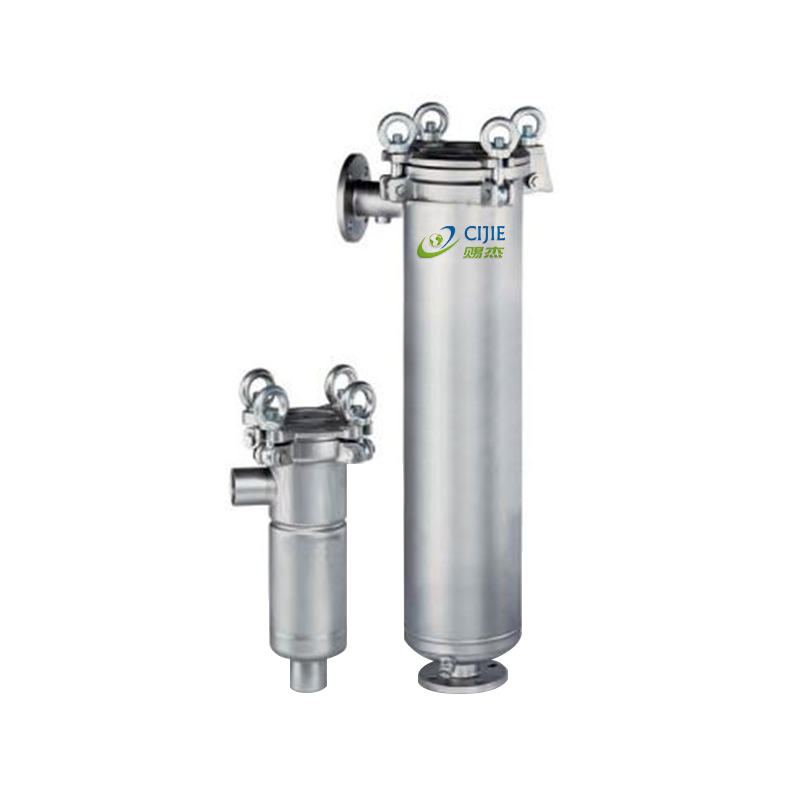
- Bag Filter — high-solids capture with fast bag change and low capital cost
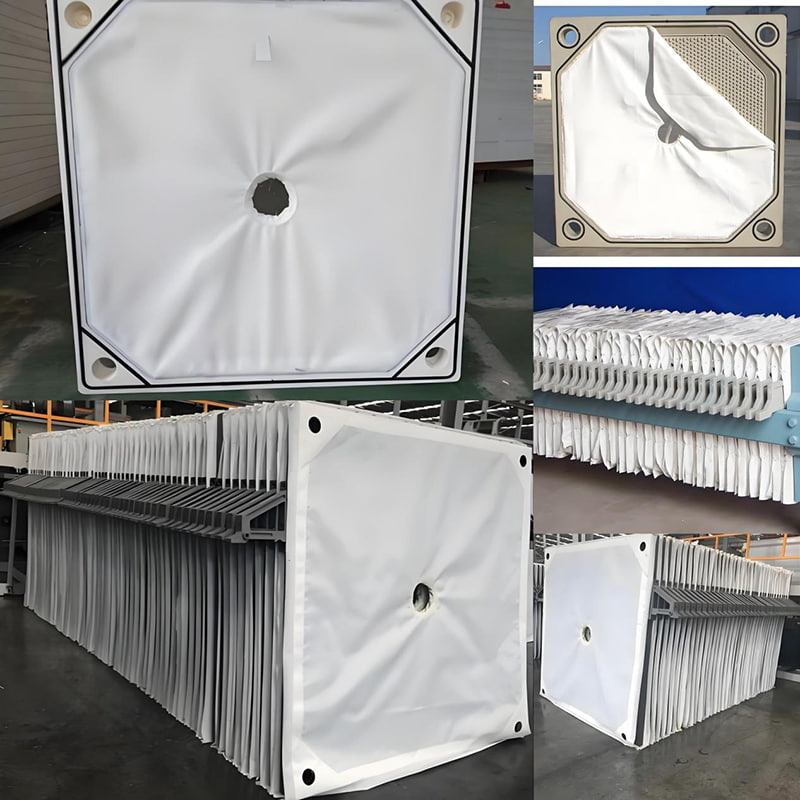
- Pressure Filter — cake-forming duty where dry solids discharge is the priority
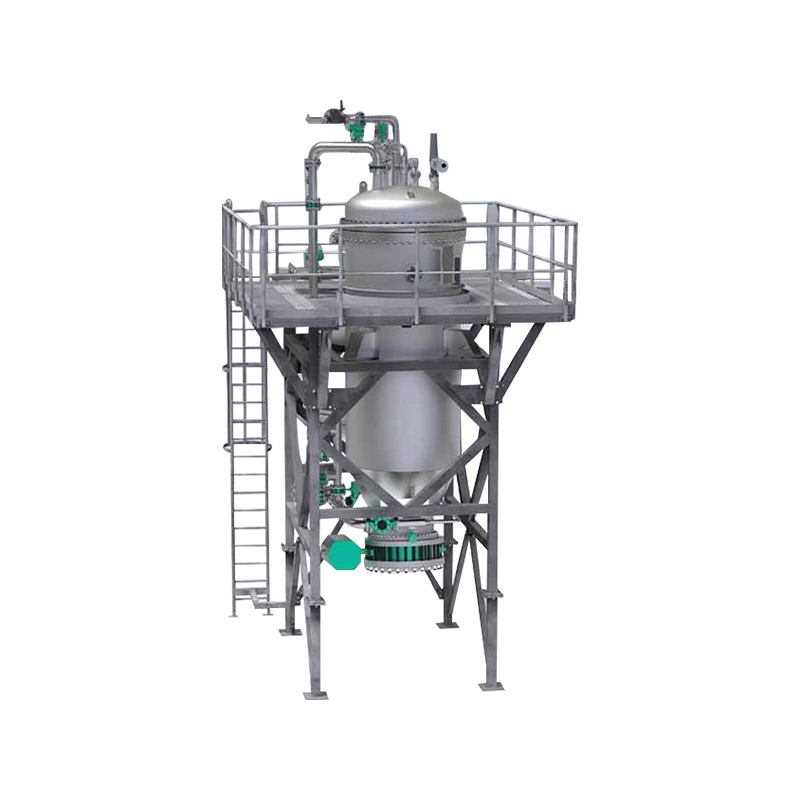
- CJZT Automatic Candle Filter — self-cleaning candle element with online washing
Information We Use to Prepare Your Configuration
A workable proposal comes from the process data below. Where a value is still open, we state the assumption in the quotation so it can be confirmed before fabrication starts.
| Project input | What it sets in the configuration |
|---|---|
| Fluid, chemistry and temperature | Wetted material (304/316L), seal grade, food or pharmaceutical documentation |
| Flow rate, batch size and cycle time | Filtration area and model selection across the 5–35 m² range |
| Solids loading and particle size | Discharge frequency, residue handling and plate inspection interval |
| Required clarity | Whether ppm-level clarification is met in one pass or needs pre-treatment |
| Pressure and line interface | Pressure rating, pump curve, signal list and control-panel scope |
| Footprint, lifting and access | Outline dimensions, discharge layout and maintenance clearance |
| Documentation and destination | Certification set, manual language, inspection reports and packing |
Frequently Asked Questions
What filtration area does the CJBS cover?
Eight models run from 5 m² to 35 m² of filtration area, with tank volumes from 600 L to 4,900 L and unit weights from 2,100 kg to 6,500 kg.
What pressure and temperature can the filter handle?
Rated working pressure is 0.1–0.4 MPa with a 0.5 MPa maximum. Because no disposable medium is used, filtration temperature is set by the fluid and the seal grade rather than by paper or cloth limits.
Does the CJBS really run without filter paper or cloth?
Yes. The airtight plate design removes the need for filter paper and cloth, which takes a recurring consumable and its disposal out of the operating cost.
Can filtrate and residue both be recovered?
Both streams are recoverable. The chamber drains completely, and residue leaves through the automatic slag discharge port, so product loss and waste volume stay low.
How automated is the filtration cycle?
A control-panel command opens the slag discharge port automatically. Linked to the plant computer, the whole filtering process runs automatically, which keeps operator attendance low and makes each cycle repeatable.
Related Products and Categories
Our portfolio also includes Non-Woven Filter Bags for applications with different operating ranges, interfaces or integration requirements.