


 English
 русский
 Français
 Español
 Deutsch
 Tiếng Việt
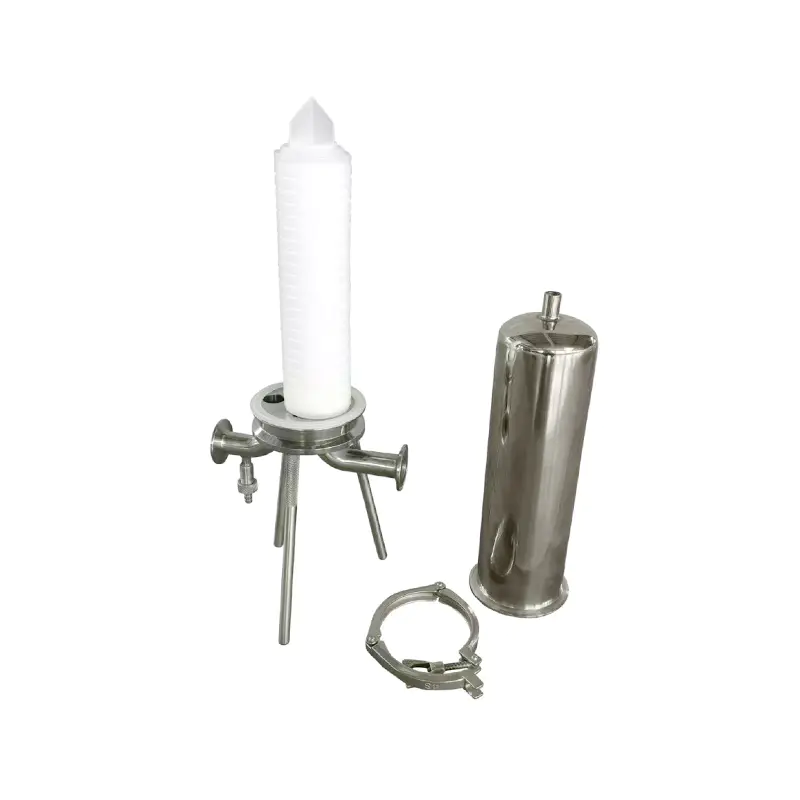
A filter cartridge is a replaceable filtering element housed inside a filter housing or system, designed to remove contaminants — such as sediment, chlorine, bacteria, or chemicals — from water, air, or other fluids. It is the core component that determines how well a filtration system performs, and choosing the right one directly affects the quality and safety of whatever is being filtered.
Whether you are managing a whole-house water system, maintaining industrial equipment, or simply replacing the cartridge in an under-sink filter, understanding how these components work and when to replace them can save both money and performance loss.
How a Filter Cartridge Works
A filter cartridge works by forcing a fluid or gas through a porous or chemically reactive medium. As the substance passes through, contaminants are either physically trapped by the medium's pore structure or chemically adsorbed and neutralized.
The three main filtration mechanisms involved are:
- Mechanical filtration — particles are physically blocked based on pore size (measured in microns)
- Adsorption — contaminants bond to the surface of the filter medium (common in activated carbon cartridges)
- Ion exchange — ions in the fluid are swapped with less harmful ones, used primarily in water softening cartridges
For example, a 5-micron sediment cartridge will trap particles as small as 5 micrometers, including sand, rust, and silt, while allowing clean water to pass through freely.
Common Types of Filter Cartridges
Filter cartridges come in a wide range of types, each engineered for a specific application and contaminant target. Below is an overview of the most widely used types:
| Type | Filter Medium | Removes | Typical Use |
|---|---|---|---|
| Sediment | Polypropylene, polyester | Dirt, sand, rust, silt | Pre-filtration, whole-house |
| Activated Carbon | Carbon block or granular | Chlorine, VOCs, odors, taste | Drinking water, under-sink |
| Reverse Osmosis (RO) | Semi-permeable membrane | TDS, heavy metals, fluoride, nitrates | Drinking water purification |
| Ceramic | Diatomaceous earth or ceramic | Bacteria, cysts, sediment | Gravity filters, countertop systems |
| HEPA | Fiberglass / synthetic fiber | Airborne particles ≥0.3 microns | Air purifiers, HVAC systems |
| Ion Exchange Resin | Resin beads | Hardness (calcium, magnesium), heavy metals | Water softeners, lab water |
Sediment Filter Cartridges
These are the most common type and are typically used as the first stage in a multi-stage filtration system. They are rated by micron size — the lower the number, the finer the filtration. A 1-micron cartridge, for instance, captures significantly finer particles than a 20-micron one, but it also clogs faster and may reduce flow rate.
Activated Carbon Cartridges
Activated carbon is highly effective at removing chlorine, chloramines, and organic compounds that affect taste and odor. Carbon block cartridges offer denser filtration than granular activated carbon (GAC) and are preferred for drinking water systems. A standard carbon block cartridge can typically treat 2,000 to 5,000 gallons before needing replacement.
Reverse Osmosis Membranes
Although technically a membrane rather than a cartridge, RO elements function as a cartridge stage within a system. They can remove up to 99% of dissolved solids, including lead, arsenic, and nitrates. RO membranes typically last 2 to 5 years, compared to the 6–12 month lifespan of pre-filter cartridges in the same system.
How to Choose the Right Filter Cartridge
Choosing a filter cartridge is not a one-size-fits-all decision. The right choice depends on what you are filtering, what contaminants are present, and what flow rate or capacity your system requires.
Step 1: Know Your Contaminants
Start with a water quality test or air quality assessment. Municipal water reports (Consumer Confidence Reports in the US) are published annually and list detected contaminants and their concentrations. If your water contains both sediment and chlorine, a two-stage system — sediment pre-filter followed by a carbon cartridge — is a practical and cost-effective solution.
Step 2: Match the Micron Rating
The micron rating determines what particle size the cartridge captures. Common ratings and their targets include:
- 50–100 microns — coarse sediment, visible particles
- 5–25 microns — fine sediment, rust, silt
- 1–5 microns — fine particles, some bacteria
- 0.1–1 micron — bacteria, cysts (e.g., Cryptosporidium, Giardia)
- 0.0001 microns — dissolved salts, viruses (RO membrane)
Note the difference between nominal and absolute micron ratings. A nominal 5-micron cartridge may only block about 85% of particles at that size, while an absolute 5-micron cartridge blocks 99.9% or more. For critical applications, always choose an absolute-rated cartridge.
Step 3: Check Compatibility with Your Housing
Filter cartridges must be physically compatible with the housing they go into. The most common standard sizes are 10-inch and 20-inch lengths, with standard and "big blue" diameter housings. Always verify the cartridge dimensions (length and outer diameter) and the connection type before purchasing a replacement.
Step 4: Consider Flow Rate and Capacity
Every cartridge has a rated flow capacity — typically expressed in gallons per minute (GPM) or gallons per cartridge lifespan. For a household using 50–100 gallons per day, a standard 10-inch sediment cartridge rated at 10,000 gallons provides roughly 3–6 months of service before replacement is needed. Industrial or commercial setups require cartridges rated for significantly higher flows.
When to Replace a Filter Cartridge
One of the most common mistakes is waiting too long to replace a filter cartridge. An expired cartridge does not just stop filtering — in some cases it can become a source of contamination, releasing trapped bacteria or saturated chemicals back into the fluid.
General replacement guidelines by cartridge type:
- Sediment cartridges: Every 3–6 months, or when flow rate drops noticeably
- Carbon block cartridges: Every 6–12 months, or after 2,000–5,000 gallons
- RO membranes: Every 2–5 years depending on water quality and usage
- Ceramic cartridges: Can be cleaned and reused several times; replace when too thin to clean safely
- HEPA air cartridges: Every 12–18 months in average household use
Visible discoloration of the cartridge is a reliable indicator for sediment filters. For carbon and RO cartridges, a return of chlorine taste or odor in your drinking water is the most practical sign that replacement is overdue.
Filter Cartridge Applications Across Industries
Filter cartridges are not limited to household water systems. They play critical roles in a broad range of industries:
- Food and beverage: Removing sediment and microbes from process water and beverages; sanitary cartridges are made from FDA-compliant materials
- Pharmaceuticals: Sterile filtration cartridges (0.2-micron absolute) used to sterilize injectable fluids and process water
- Industrial manufacturing: Protecting machinery and hydraulic systems from particulate contamination
- HVAC and cleanrooms: HEPA and ULPA cartridges controlling airborne particle counts to meet ISO cleanroom standards
- Aquariums and aquaculture: Biological and mechanical filter cartridges maintaining water quality for aquatic life
In pharmaceutical manufacturing alone, the global demand for sterile filtration — largely driven by single-use cartridge filters — was valued at over $5 billion in 2023 and continues to grow, reflecting the critical role these components play beyond the consumer market.
Practical Tips for Getting More From Your Filter Cartridge
Maximizing the lifespan and effectiveness of a filter cartridge comes down to a few straightforward practices:
- Use staged filtration. A coarser sediment pre-filter protects a finer carbon or RO cartridge from clogging prematurely. This can double or triple the lifespan of the more expensive downstream cartridge.
- Monitor pressure drop. A significant drop in outlet pressure is the clearest sign of cartridge loading. Installing a pressure gauge before and after the housing gives you a real-time indicator of cartridge condition.
- Store replacement cartridges properly. Unused cartridges should be kept sealed and away from direct sunlight. Carbon cartridges stored improperly can adsorb airborne contaminants before they are even installed.
- Don't over-filter. Using a cartridge with a finer rating than necessary increases pressure drop, reduces flow, and shortens cartridge life without any meaningful benefit.
- Keep a replacement log. Noting the installation date and gallons processed helps you replace cartridges on schedule rather than reactively — particularly important in systems without pressure gauges.

 Phone: +86 182 1733 6020
 Add: No.7 Industrial Park, Xiayuan Town, Rugao City, Jiangsu Province