


 English
 русский
 Français
 Español
 Deutsch
 Tiếng Việt
In the world of liquid filtration, the question of particle size removal sits at the very core of a system’s purpose and performance. For engineers, facility managers, and procurement specialists evaluating the Liquid Multi-Core Filter, understanding its capabilities in this area is not about seeking a single magic number, but about comprehending a range defined by design, media, and application.
The Fundamental Principle: It’s All About the Media
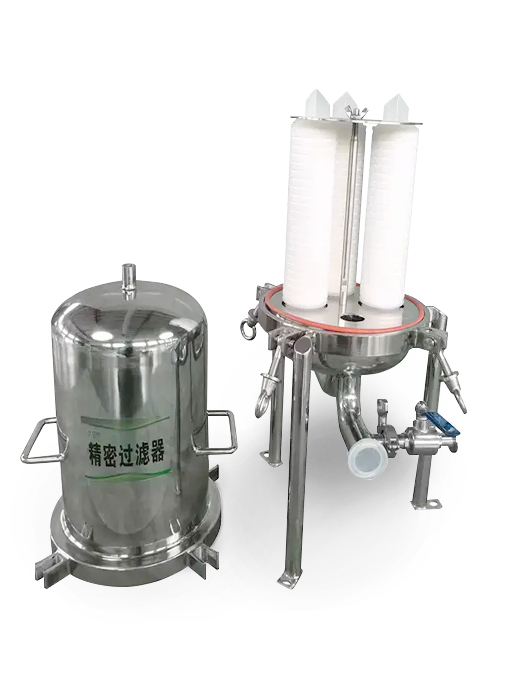
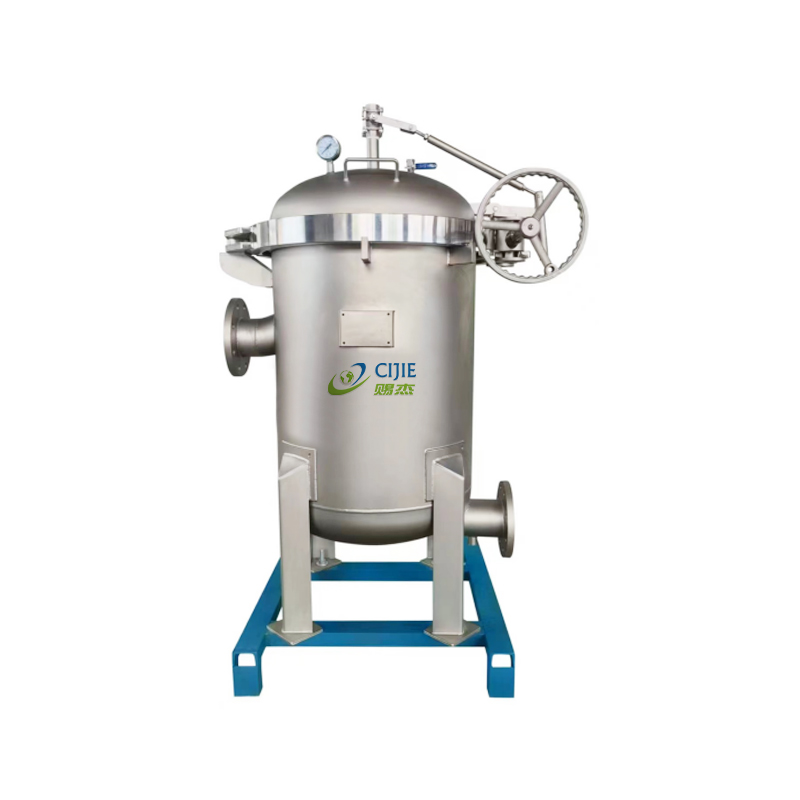
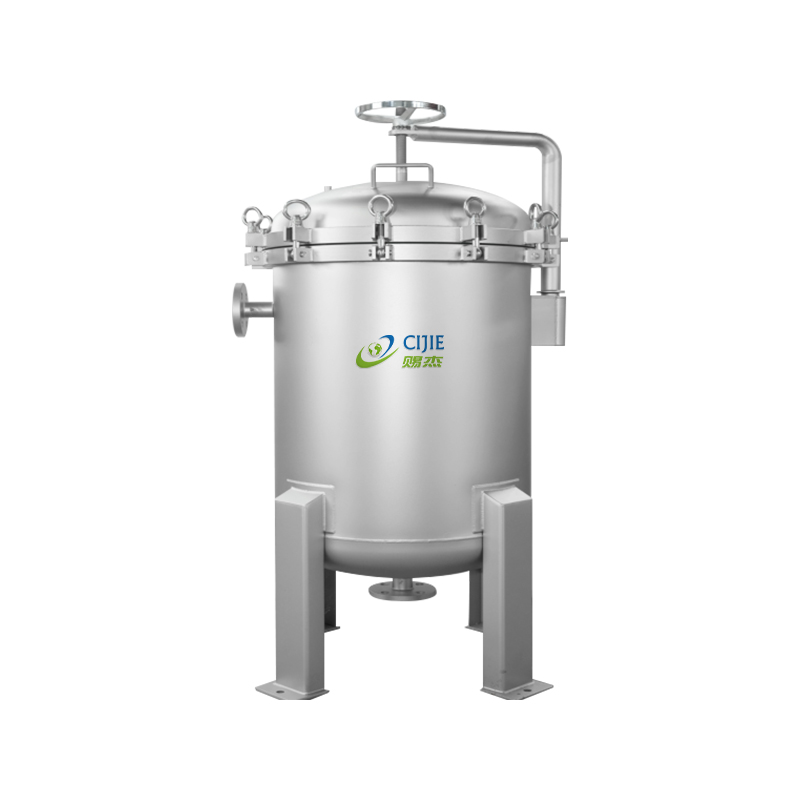
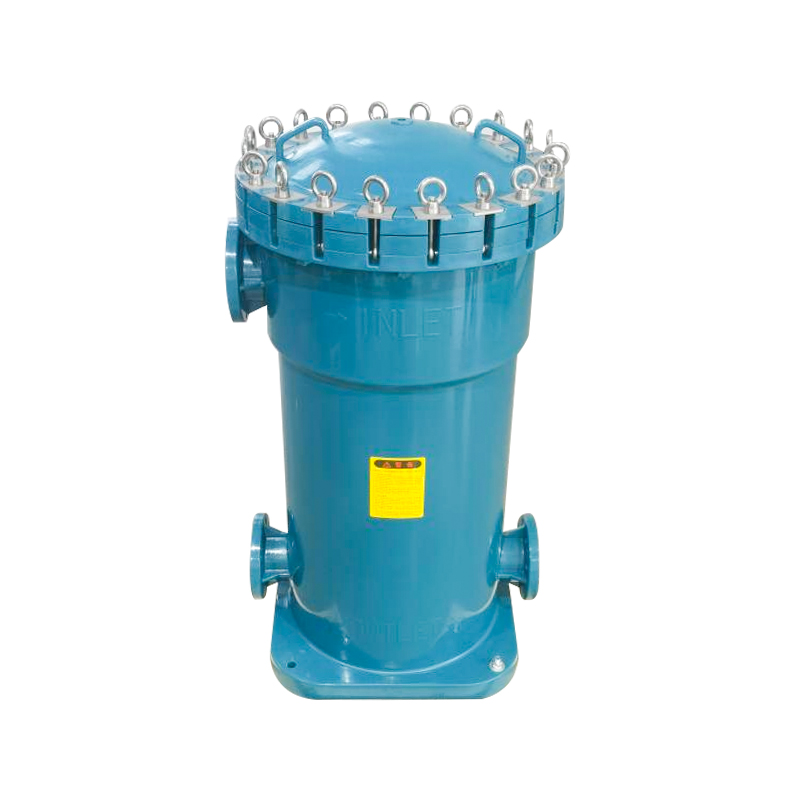
First, a critical clarification: a Liquid Multi-Core Filter is not a monolithic filter with a fixed pore size. It is a platform or housing designed to contain multiple, individual filter elements—the “cores.” Therefore, the question of particle size removal is fundamentally a question about the filter media loaded into those cores. The filter’s housing enables efficiency, capacity, and flow, but the filtration precision is dictated by the cartridge you select.
Think of it like a computer: the tower (the multi-core housing) determines power supply, expansion slots, and cooling, but the specific tasks—graphic design, data analysis, gaming—are determined by the software and components you install. The Liquid Multi-Core Filter provides the robust, scalable environment; the filter media defines the cut-off point.
The Spectrum of Available Media and Their Micron Ratings
Manufacturers typically offer a wide array of compatible filter cartridges for multi-core systems, each targeting different particle size ranges. Here is a breakdown of common media types and their typical effective removal ratings:
-
String-Wound & Spun Polypropylene Cores: These are depth filtration media, where particles are trapped throughout the thick matrix of fibers. They are commonly available in ratings from 1 micron to 100 microns. A “50-micron” cartridge is excellent for catching coarse sand and silt, while a “5-micron” cartridge will capture fine sediment and some cyst-type particles. Their strength lies in high dirt-holding capacity for their given rating.
-
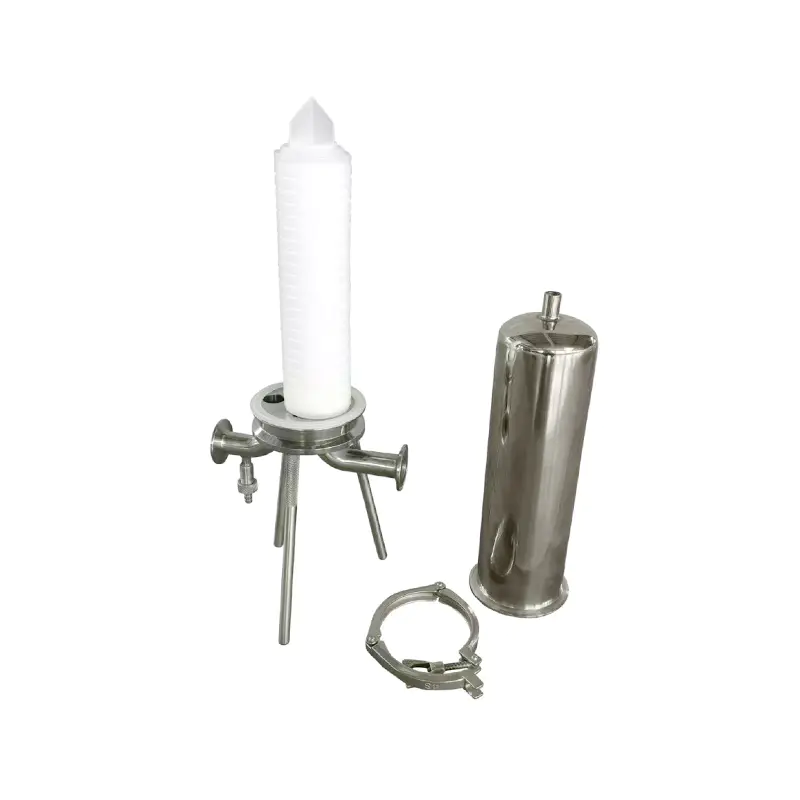
Pleated (Membrane or Non-Woven) Cores: These offer a larger surface area in a compact space. They can be made from polyester, polypropylene, or glass fiber.
- Standard Pleated: Often used for finer particulate, ranging from 0.5 microns to 30 microns.
- Absolute Rated Pleated: These are designed with a more consistent pore structure, often using a membrane layer. They provide a more reliable “absolute” removal rating at a specific size, such as 1.0, 0.45, or 0.2 microns. They are crucial for applications requiring a guaranteed size cut-off.
-
Activated Carbon Cores: While excellent for adsorbing chlorine, chemicals, and odors, their particulate removal rating is secondary and depends on the substrate. Impregnated carbon blocks can combine chemical adsorption with mechanical filtration down to 1-5 microns.
-
Sintered Mesh or Stainless Steel Cores: These are reusable, cleanable elements offering precise, absolute-rated surface filtration. They are commonly available in sizes from 1 micron to 200 microns. Their rating is extremely consistent, as the pore size is engineered through controlled sintering of metal powder or woven mesh layers.
Key Terminology: Nominal vs. Absolute Rating
- Nominal Micron Rating: This is a percentage-based rating, often meaning the filter will remove approximately 85-90% of particles of the stated size. A “10-micron nominal” filter will let some 10-micron particles pass through. It indicates general performance.
- Absolute Micron Rating: This is a much stricter standard. It signifies that the filter will remove 98.7% or more of particles at or above the stated size. An “10-micron absolute” filter is a barrier to virtually all particles 10 microns and larger. For critical applications in pharmaceuticals, food & beverage, or semiconductor manufacturing, absolute ratings are specified.
A Liquid Multi-Core Filter system can be configured with cores of either rating, depending on the cartridges purchased.
How the Multi-Core Design Enhances Particle Removal Strategy
This is where the multi-core design transcends a simple single-cartridge filter. Its architecture allows for sophisticated particle removal strategies:
-
Staged or Graded Filtration: This is the most powerful application. Cores with different micron ratings are installed in series within the same vessel or across multiple vessels.
- Stage 1 (First Bank of Cores): Larger pore size (e.g., 25 micron). Its job is to remove the bulk of coarse contamination, protecting and extending the life of the finer filters downstream.
- Stage 2 (Second Bank of Cores): Finer pore size (e.g., 5 micron). It captures medium-sized particles.
- Stage 3 (Optional): Even finer or specialized media (e.g., 1 micron absolute, or activated carbon).
This graded approach ensures optimal efficiency, maximizes the dirt-holding capacity of the entire system, and protects expensive final-stage filters. It allows for the removal of a broad spectrum of particle sizes, from large down to sub-micron, in a single, compact system.
-
Increased Surface Area for Consistent Performance: For a target particle size (e.g., removing all particles above 10 microns), using multiple cores with the same 10-micron media provides a much larger total surface area than a single cartridge. This means:
- Lower pressure drop across the system.
- Longer service life before change-outs are needed.
- More stable flow rates, as the system can handle contaminant loading without rapidly clogging a single point.
Practical Factors That Influence Effective Particle Removal
Stating a filter is “rated for 5 microns” does not tell the whole story in a real-world installation. The Liquid Multi-Core Filter’s performance is influenced by:
- Fluid Characteristics: The viscosity, temperature, and chemical compatibility of the liquid affect media performance. A hot, viscous fluid might cause a nominal-rated cartridge to perform less precisely.
- Differential Pressure: As the filter cores load with contaminant, the pressure drop across them increases. Excessively high differential pressure can force particles through the media or even cause mechanical bypass, compromising the stated removal rating.
- Initial System Contamination: During commissioning, piping debris (welding slag, Teflon tape, rust) can quickly blind fine filter cores. It is standard practice to start with a “scrub” filter (a coarser cartridge) during flush-out, then install the final, finer-rated cores.
- Proper Sealing and Installation: If the cores are not properly seated in the Liquid Multi-Core Filter housing, or if O-rings are damaged, unfiltered liquid will bypass the media entirely, rendering the micron rating irrelevant.
Real-World Application Examples
To ground this discussion, here is how particle size dictates core selection in different industries:
- Pre-Filtration for RO/DI Systems: Protecting delicate reverse osmosis membranes requires removing particles as small as 5-10 microns. A Liquid Multi-Core Filter might be loaded with a 20-micron string-wound core first, followed by a 5-micron pleated absolute core.
- Coolant Filtration in Machining: Removing fine metal swarf and grinding particulates (often in the 10-25 micron range) is essential for tool life and surface finish. A multi-core system with sintered stainless steel mesh cores (e.g., 15 micron) allows for easy cleaning and reuse.
- Final Product Polish in Food & Beverage: Before bottling, a beverage might be passed through a polishing filter to ensure brilliant clarity by removing any remaining yeast or haze particles down to 0.5-1.0 microns. Absolute-rated pleated cores in a sanitary multi-core housing would be used.
- Protection of Spray Nozzles & Instrumentation: Nozzles and sensors can be clogged by particles as small as 50-100 microns. A simple, cost-effective multi-core filter with spun polypropylene cores provides reliable protection.
Conclusion: A Framework for the Right Answer
So, what particle size can the Liquid Multi-Core Filter remove?
The precise answer is: The particle size defined by the filter cartridges you specify for your specific application, within the range supported by the filter housing (typically from 0.5 microns to 100+ microns, depending on media type).
When evaluating this system, shift the question from “What does it remove?” to “What do I need to remove, and how can this flexible platform achieve it most efficiently?” Consult with your filtration supplier or the system manufacturer. Provide them with:
- The nature of your liquid.
- The contaminant type and the smallest particle size you must capture.
- Your required flow rate.
- Your maintenance and cost parameters.
They can then specify the appropriate media—string-wound, pleated, sintered, absolute, or nominal—to load into the robust Liquid Multi-Core Filter housing. By understanding this core principle, you move from seeking a simple specification to engineering a filtration solution that delivers reliable, predictable particle removal for your exact needs.

 Phone: +86 182 1733 6020
 Add: No.7 Industrial Park, Xiayuan Town, Rugao City, Jiangsu Province