

 English

Single Cartridge Liquid Filter Guide: Sizing, Media Selection and Change-Out
Most single cartridge liquid filter problems are not cartridge problems. A housing sized off the pump curve, a nominal 10 micron element doing duty at 25 micron, three cubic metres an hour pushed through a filter rated for half that, and a differential pressure gauge nobody reads will destroy cartridge life within weeks, and no premium media will recover it.
A single cartridge filter is usually specified once, at commissioning, and then never revisited, even after the product, the viscosity or the cleaning chemical has changed.
What follows is the working checklist: what the unit actually is, which figures decide the size, how to read a micron rating without being misled, where installation goes wrong, and when one cartridge should become several.
What a Single Cartridge Liquid Filter Actually Is
A single cartridge liquid filter is a pressure housing that holds exactly one cylindrical filter cartridge and forces liquid through the media, so particles are trapped on the surface or inside the depth of the cartridge before the liquid reaches the outlet.
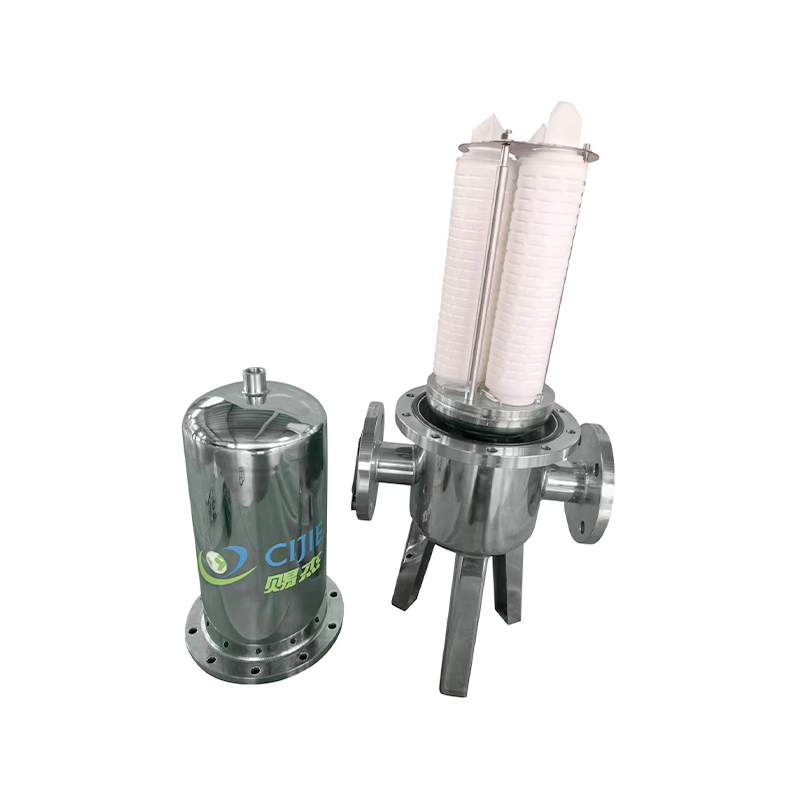
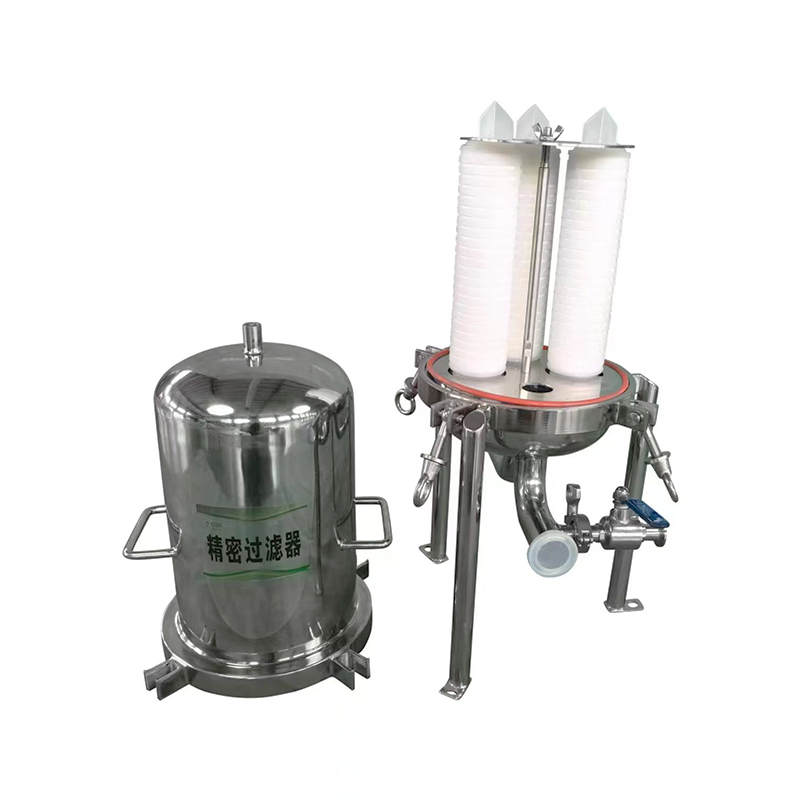
The assembly has four working parts: the housing with its inlet, outlet, drain and vent; the cartridge; the seals that stop unfiltered liquid bypassing the media; and the pressure gauges that show when the cartridge has loaded. Everything else is detail, and detail is where money is saved or lost.
The unit is only as fine as the cartridge inside it. A polished 316L housing fitted with a nominal 25 micron cartridge is a 25 micron filter, and the housing cannot improve that figure.
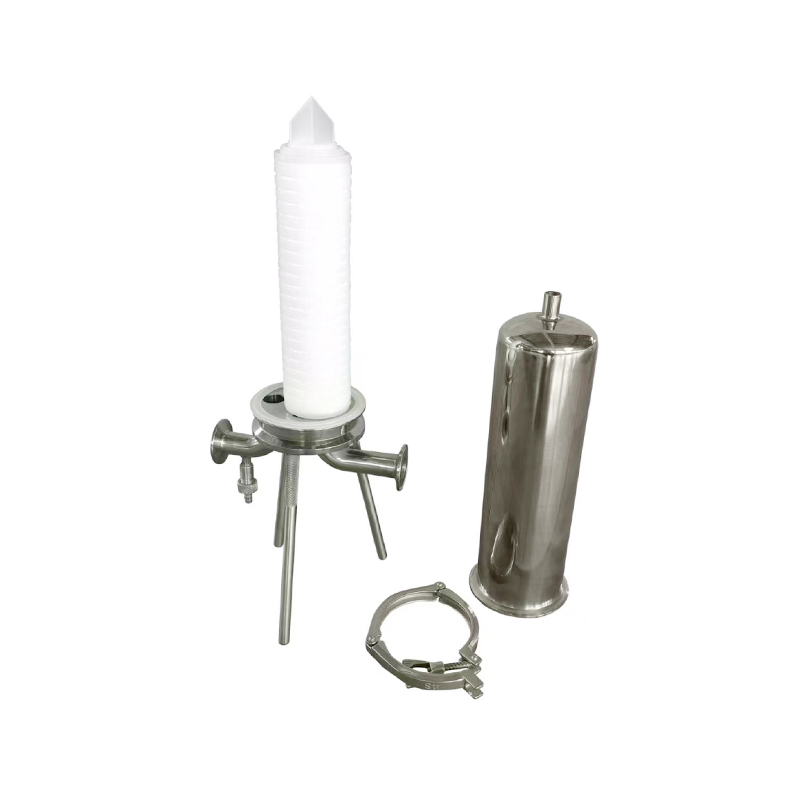 Single Cartridge Liquid Filter for Low-Flow DutyFor low-flow laboratory duty, this single-cartridge housing accepts 222/226 cartridges and supports filtration down to 0.22 microns.View Product →
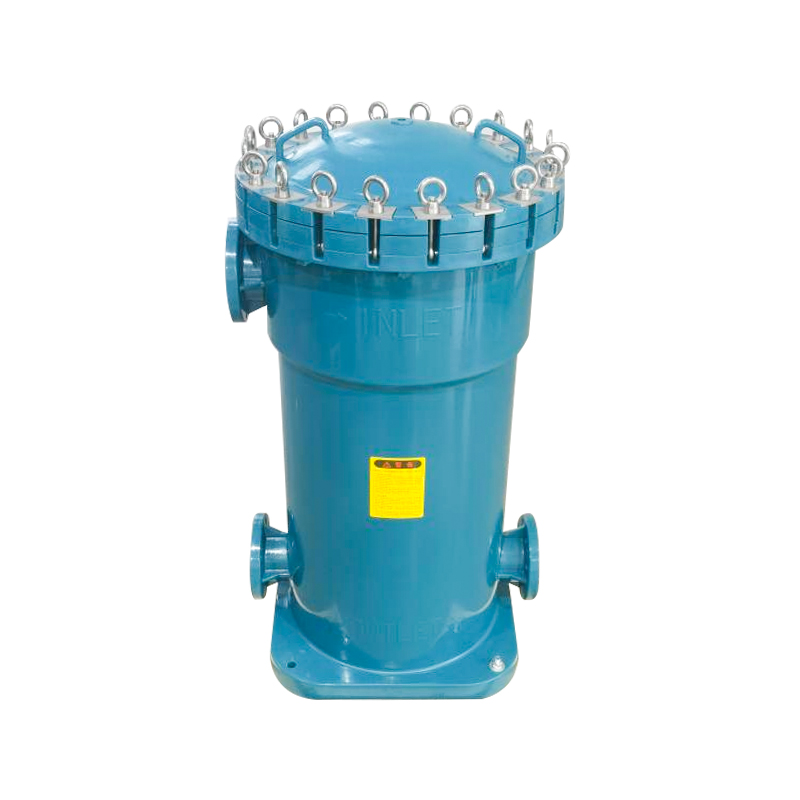
Housings in polypropylene cover most ambient chemical duty, PVDF appears where solvents attack polypropylene, and 304 or 316L stainless is the default for sanitary, high temperature and higher pressure work. Cartridge length follows the duty: 10 inch units dominate skid and pilot service, while 20 and 30 inch versions handle higher flows before a multi-cartridge housing becomes worthwhile.
- Threaded connections suit low flow, low pressure utility duty
- Tri-clamp and flanged connections suit sanitary and higher pressure service
- Vent and drain ports are not optional on viscous or aerated liquids
- Seal material such as EPDM, FKM, silicone or PTFE usually decides chemical compatibility, not the housing
Sizing It Right: Flow, Viscosity and Dirt Load
Size the filter on flow at working viscosity, not on pipe diameter, and keep the clean differential pressure under roughly 0.2 bar so the cartridge has somewhere to load before it reaches the change-out limit.
Viscosity decides more than most datasheets admit. Water at 1 cP passes a pleated cartridge easily; a resin or coating at 200 cP can produce several times the pressure drop through the same element, and the correct answer is more surface area, not a larger pump. Measure viscosity at the coldest point the process will see, because a cold start is what tears pleated media.
| Parameter | Typical starting point | Why it decides the selection |
|---|---|---|
| Flow rate | 50 to 70 percent of the housing rating | leaves headroom for dirt loading without pump rework |
| Working viscosity | measured at the lowest process temperature | cold start pressure spikes collapse pleated media |
| Particle load | mg/L of solids plus the size band | sets the change-out interval, not the removal rating |
| Operating temperature | at least 5 C below the seal limit | polypropylene bowls soften in hot service |
| Chemical compatibility | checked against every wetted part | a compatible cartridge in an incompatible bowl still fails |
| Pressure measurement | gauges upstream and downstream | without two gauges, loading stays invisible |
Double the flow through the same cartridge and the pressure drop roughly quadruples. A unit running above 0.3 bar clean is already undersized for the duty, whatever the datasheet claims.
Cartridge Media and Micron Ratings: Read the Number First
A nominal rating describes an average retention, an absolute rating describes a defined cutoff, and only the beta ratio lets two cartridges be compared on the same basis.
Beta ratio at a given size equals the number of particles at or above that size upstream, divided by the number downstream. Beta 200 at 10 micron means 99.5 percent retention; beta 75 means 98.7 percent. Same cartridge, very different claim.
Ask for the beta curve at the size that matters to the process rather than a single headline figure. Two suppliers quoting 10 micron absolute can be a full grade apart in practice, and the gap only shows up as shorter cartridge life or a failed filtrate test.
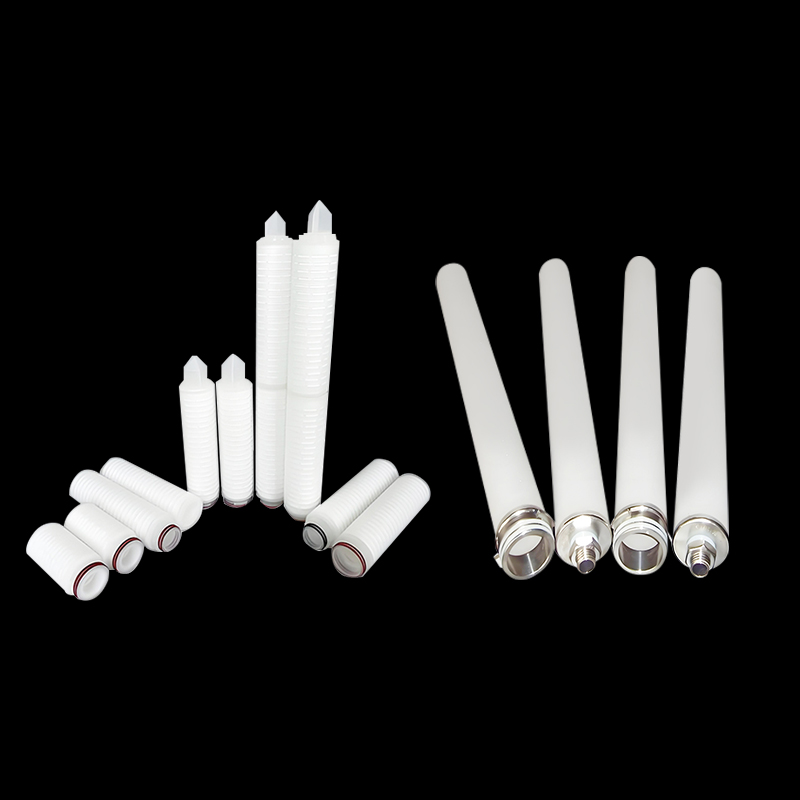
| Media | Typical ratings | Strong points | Watch out for |
|---|---|---|---|
| Pleated polypropylene | 0.5 to 40 micron | high area, low clean pressure drop, low cost | collapses once the pressure limit is passed |
| String wound | 1 to 100 micron | depth loading, tolerant of fibrous dirt | channeling if wound loosely |
| Melt blown | 1 to 75 micron | graded pore structure, good dirt holding | limited solvent range |
| PTFE membrane | 0.1 to 1 micron | solvent and high temperature resistance | low dirt capacity, high unit cost |
| Activated carbon block | chlorine and odour removal | adsorption plus particle removal | short life, needs a prefilter |
| Stainless mesh | 5 to 200 micron | cleanable and reusable | poor fine filtration below 20 micron |
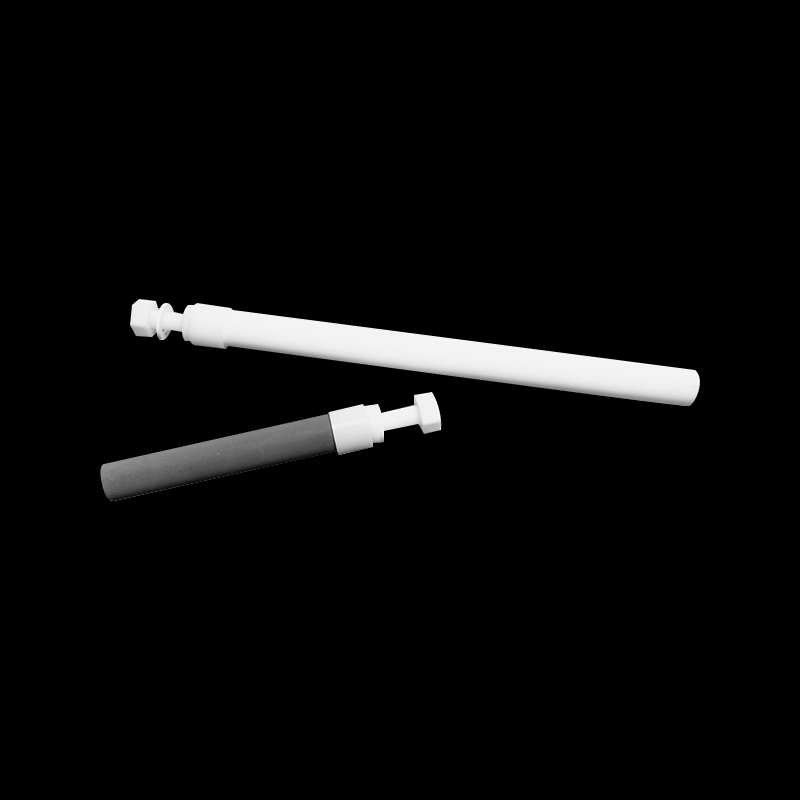 Filter Cartridges and Cartridge Filtration SystemsBrowse replacement elements and housings across liquid, gas and air duty, with media and micron ratings for process and OEM filtration.View Product →
Housing, Seals and the Installation Errors That Cost Money
Bypass is the most expensive failure in a single cartridge system, and it almost always comes from a seal rather than a torn cartridge.
Unfiltered liquid takes the easiest path available. A rolled O-ring, a cartridge that never seats on its locating post, an unvented cap holding an air pocket across the top of the media, or an element shorter than the bowl will all produce a filter that looks correct, reads a suspiciously low differential pressure and passes particles straight through.
- Wrong elastomer, softened by solvent and extruded under pressure
- Cap over-torqued until the thread deforms and the seal no longer seats
- Vent left closed, so the upper media never wets and never filters
- Cartridge not pushed fully home, leaving a gap at the bottom
- Drain or spare port left open on the clean side
- Flow direction reversed on an outside-in cartridge
- Gauge taps blocked, so loading stays hidden until the cartridge collapses
At commissioning, crack the vent until liquid runs bubble free, then watch the differential pressure rise with flow. A flat reading across a system that is clearly carrying dirt is a bypass symptom, not proof of a clean filter.
Change-Out Rhythm and the Real Cost per Thousand Litres
Trigger cartridge changes on differential pressure with a calendar backstop, and record both numbers, because the trend says more than any single reading.
- Log clean differential pressure at commissioning flow and write the figure on the housing.
- Set the change-out point at the lower of 0.7 bar or the housing manufacturer's limit.
- Inspect every removed cartridge for tears, channeling and the position of the dirt ring.
- Check the seal and the bowl thread before a new cartridge goes in.
- Trend the interval against production volume, and investigate any shortening trend immediately.
A cartridge that lasts three weeks is rarely a cartridge fault. Either the dirt load has risen, the flow has risen, or the grade is too fine for the duty. Moving one step coarser or to a longer element often halves annual spend even when the unit price goes up.
Total cost follows the change-out count, not the cartridge price. One extra change a month, at thirty minutes of lost production each time, usually outweighs the price gap between a standard and a premium element several times over.
When One Cartridge Is Not Enough
Move to a multi-cartridge housing when the duty needs more than about 20 m3/h, or when a single element cannot hold the change-out interval the maintenance window allows.
Single cartridge
- Lowest capital cost and smallest footprint
- One part number to stock and train on
- Ideal for batch, pilot and line-dedicated duty
- Limited dirt capacity at higher flow
- Frequent changes once flow climbs
Multi-cartridge housing
- Three to twenty-one elements in one vessel
- Shared change-out in a single shutdown
- Longer intervals at the same micron rating
- Higher capital cost and larger footprint
- Better fit for continuous process duty
The choice is rarely about filtrate quality, since both housings can carry the same media. It is about area, downtime and spares. Batch plants that change cartridges between products often stay single, while continuous lines usually justify the larger vessel on labour alone. A filtration partner can model both options against the same duty before capital is committed, and the filtration solutions overview shows how that sizing work is normally structured.
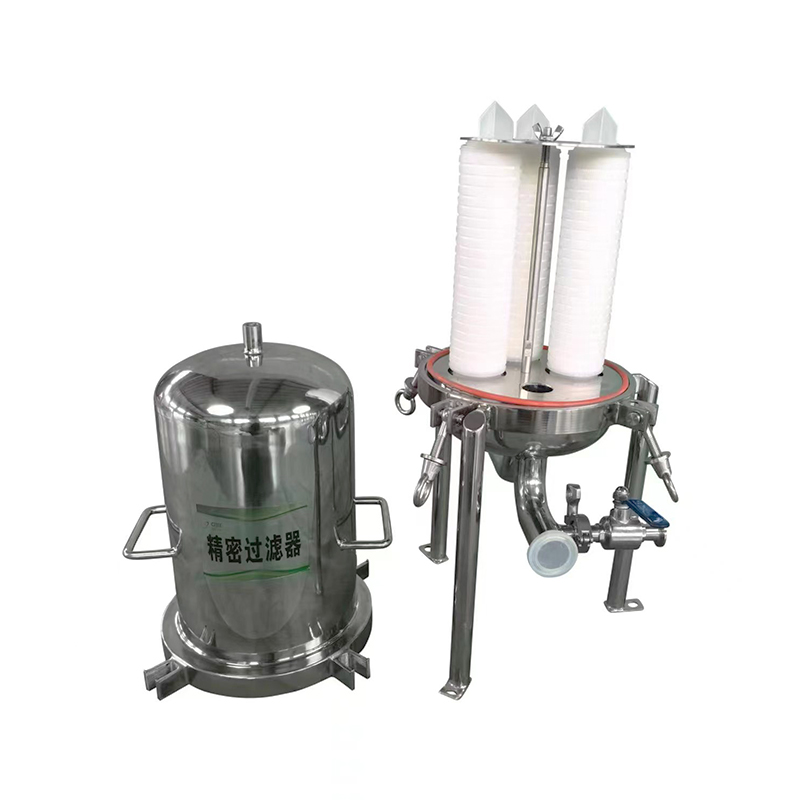 Multi-Cartridge Liquid Filter Housing for Higher FlowsFor continuous or larger duties, this housing accepts 3–9 cartridges and supports 222/226 options down to 0.22 microns.View Product →
A useful test: if the same housing is opened more than once a month, the cartridge area is too small for the duty.
Where Single Cartridge Liquid Filters Earn Their Keep
Single cartridge units dominate low and medium flow duty where products change often and a dedicated filter per line is cheaper than a shared system.
- Chemical and pharmaceutical processing: solvent, intermediate and API filtration in stainless housings, with the cartridge changed between batches.
- Food and beverage: polish filtration ahead of filling, where the housing is cleaned and the element replaced on a validated schedule.
- Coatings and paint: resin and pigment filtration, where viscosity rather than flow sets the size.
- Automotive: electrocoat circulation, paint supply and parts washing loops.
- Paper: process water and coating colour filtration on machines with tight floor space.
In batch plants the cartridge is often changed between products rather than on pressure. Size for the dirtiest product in the campaign, not the average one.
Frequently Asked Questions
What is the difference between a single cartridge and a single bag filter?
A bag filter holds a fabric or mesh bag in a basket and suits high dirt loads with coarse retention, typically 1 to 200 micron. A cartridge filter uses a pleated, wound or membrane element and gives finer, more repeatable retention in a smaller housing. Bags win on dirt capacity and price per change; cartridges win on absolute ratings and cleaner filtrate.
Which micron rating should I start with?
Start one grade coarser than the finest particle the downstream equipment can tolerate, then tighten only if the filtrate test demands it. Plenty of lines run 5 micron cartridges where 20 micron would protect the process equally well and last three times as long.
Can a single cartridge liquid filter be cleaned and reused?
Pleated, wound and melt blown elements are designed for single use, and backwashing them usually damages the pore structure and shifts the rating. Stainless mesh cartridges are the exception and can be cleaned and returned to service whenever the housing allows access.
How do I know the cartridge is bypassing?
A differential pressure that stays flat while the process is clearly carrying solids, combined with particles appearing downstream, points to bypass. Shut down, vent, remove the element and check the seal, the seat and the element length against the housing drawing before restarting.
Most sizing questions resolve fastest when flow, viscosity, temperature, target micron rating and change-out limit are stated together.

Copyright © RUGAO CIJIE ENVIRONMENTAL TECHNOLOGY CO., LTD. All Rights Reserved. Industrial Filtration Equipment Factory Filtration Equipment Manufacturer
